The Architectural and Spiritual Splendor of Munyonyo Martyrs Basilica.
Set on a serene 10-acre piece of land, Munyonyo Martyrs Basilica stands as a monumental symbol of faith, history, and architectural excellence in Uganda. The shrine marks the sacred site where St. Charles Lwanga baptized St. Kizito and other future martyrs before their fateful journey to Namugongo in 1886.
The magnificent structure was designed by Architect Robert Sseremba and constructed by Seyani Construction International, blending modern engineering with deep spiritual symbolism. Rising
47 meters high and crowned with a 30-meter cross, the basilica commands attention both as a place of worship and as an architectural landmark.
The basilica can holds up to 1,600 people, both inside and in the adjoining outdoor spaces. Along the base of the interior floor, the names of all the Uganda Martyrs are inscribed, honoring
their memory in perpetuity. The Way of the Cross, artistically placed around the interior, adds another sacred dimension to the worship experience.
Munyonyo Martyrs Shrine: Honored as a Minor Basilica by Pope Francis
IIn a historic and deeply meaningful recognition, Pope Francis granted Munyonyo Martyrs Shrine the prestigious title of Minor Basilica — a designation that signifies
the church’s spiritual, historical, and architectural importance within the Catholic Church. The decree was announced by His Eminence Robert Cardinal Sarah on 29th July 2019, during
the celebrations marking the 50th Anniversary of the Symposium of Episcopal Conferences of Africa and Madagascar (SECAM). This momentous occasion not only elevated Munyonyo’s status in the global
Catholic community but also reaffirmed its profound role in the faith and history of Uganda.
The recognition came at the request of the Archbishop of Kampala, the late Dr. Cyprian Kizito Lwanga, whose devotion and leadership helped shape Munyonyo into a beacon of faith, pilgrimage, and evangelization.
The title “Minor Basilica” is among the highest honors that can be bestowed upon a church, signifying its special connection to the Pope and the universal Church.
land scale
Munyonyo martyrs church was set on a 10-acre piece of land. According to the plan of the martyrdom sit of munyonyo-shrine(church), it was built on a place where St. Charles Lwanga Baptized St. Kizito and other future martyrs
before their journey to Namugongo
Architect
The Architectural plans were made by Architect Robert Sseremba and the construction were made by Seyani Construction International.
Total Area
The church building is 47meters tall and topped by a 30 meters cross. Making it so unique to all other churches in All of Africe
Architectural Design and Construction of the Basilica
The church is in a unique circular form embodies unity and eternity, Where on sides its surrounded with supporting 12 pillars representing the 12 apostles, The 12 Tribes of Israel ,The 12 stars on Mather Mary’s crown and
The New Jerusalem: In the Book of Revelation, the heavenly city is described with 12 gates and 12 foundation stones, representing the perfection and completeness of God’s eternal kingdom.
Pillar construction foundation
The ongoing construction captured in these images represents not just the early stages of a building, but the beginning of something transformative.In this phase of construction, engineers and builders were seen working diligently
to prepare and reinforce the foundation. Their coordinated efforts from digging and compacting soil to assembling steel reinforcements ensure that the structure will stand firm for generations. Each beam, rod, and
concrete column is carefully aligned to meet the highest standards of safety and durability.
pillars before
The image highlights the rising concrete pillars that the very skeleton of the structure. These 12 pillars embody resilience and growth, representing the transition from groundwork to visible progress. Supported by
scaffolding and precision engineering, they mark the framework upon which the entire project will take shape.
Beyond the physical work, this stage reflects teamwork, dedication, and vision. It is a reminder that progress requires both a strong base and a clear goal. Just as these pillars uphold the structure, so too do unity and
hard work uphold development within a community.
The foundation and pillars we see here are more than concrete and steel — they are the embodiment of dreams taking shape, of transformation built one step at a time.
Munyonyo-martyrs shrine basilica
Church was elevated to the rank and dignity of Minor Basilica on 29.07.2019 by Pope Francis represented by Cardinal Robert Sarah
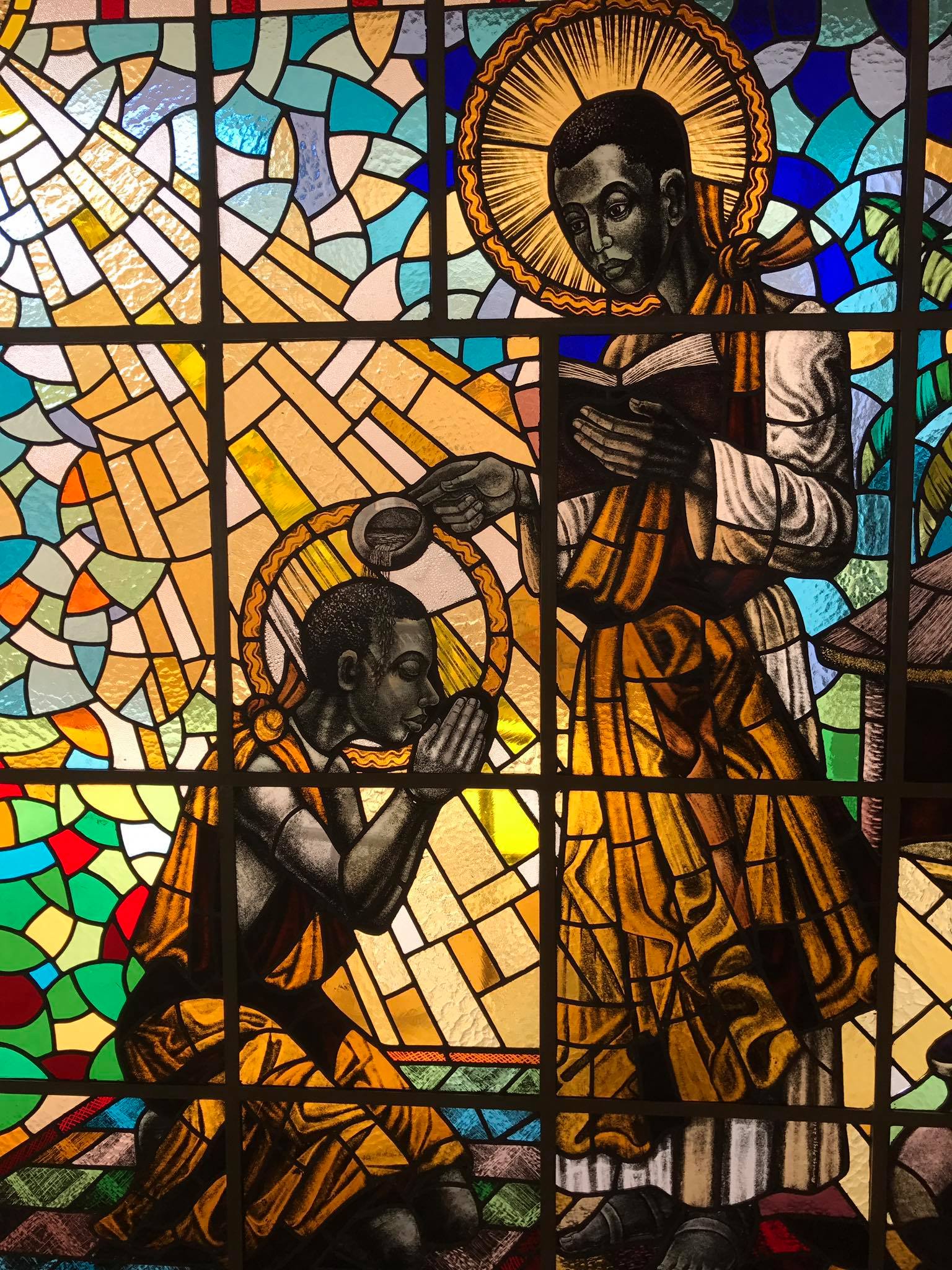
A few things about the windows of stained glass
The church is surrounded by glass windows with stained glass windows of the events which happened on 26 May 1886 in Munyonyo. ” Where King Mwanga takes his decision to kill Christian subjects & baptism of St. Kizito by St. Charles
Lwanga”,.
The Royal Judgment at Munyonyo – The Beginning of the Martyrs’ Journey (26 May 1886)
This stained glass window at Munyonyo Martyrs Shrine artistically captures one of the most defining moments in Uganda’s Christian history — the royal court of King Mwanga II of Buganda, held
on 26th May 1886.
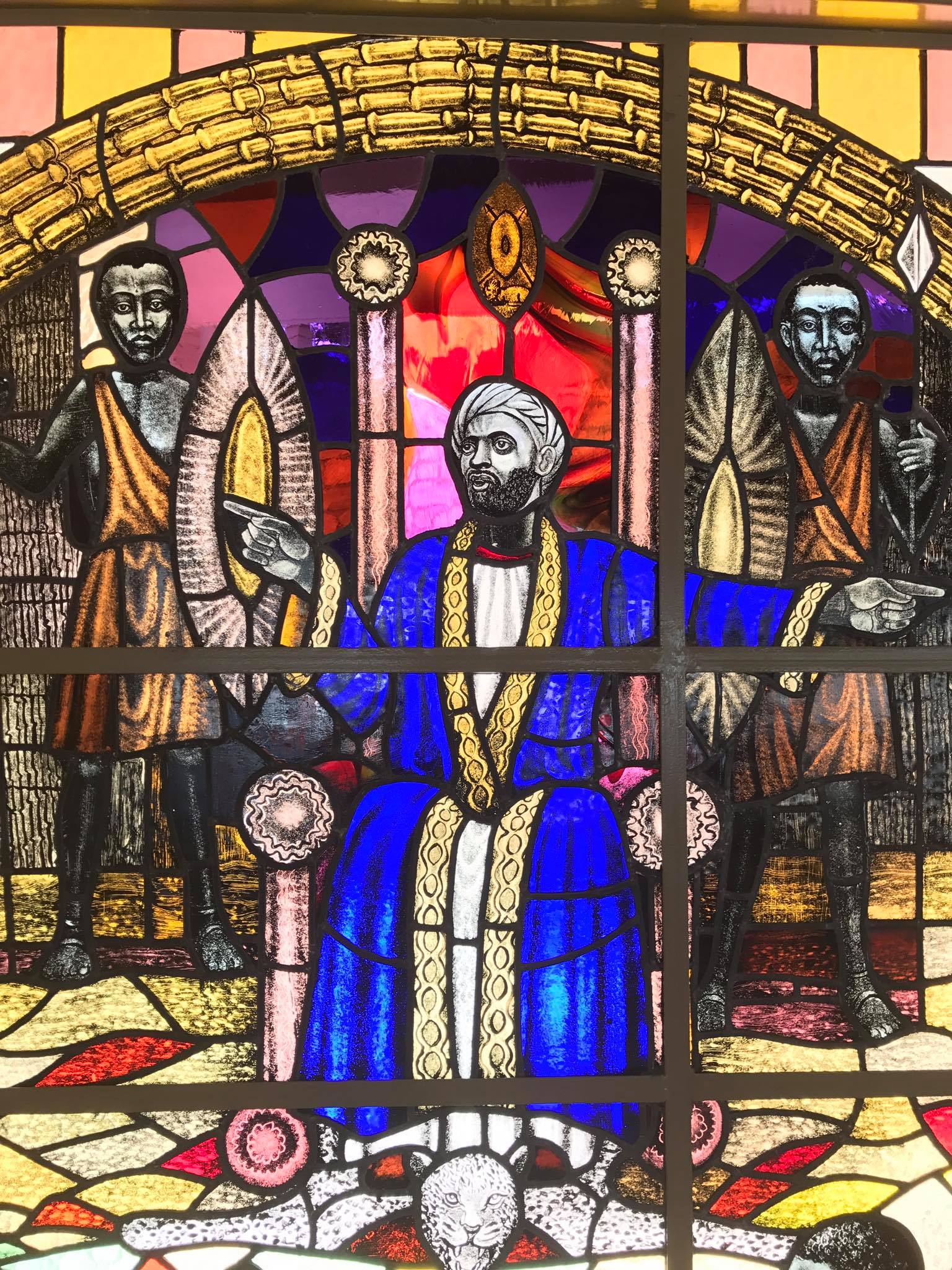
It was here at Munyonyo Palace that the young king, angered by the growing influence of the Christian faith among his pages and subjects, made the fateful decision to execute those who refused to renounce their
belief in Christ.
King Mwanga’s hostility toward Christianity arose from several factors:
- Loss of royal authority: Christian converts pledged loyalty to God above the Kabaka (king), which he viewed as defiance to his rule.
- Foreign influence: The presence of European missionaries (Catholic and Anglican) was seen as a threat to Buganda’s sovereignty.
- Moral resistance: The Christian pages rejected immoral royal practices, particularly those that conflicted with their faith, further angering the king.
Following the king’s decree at Munyonyo, Charles Lwanga, the leader of the Catholic pages, together with Joseph Mukasa Balikuddembe, Andrew Kaggwa, Denis Ssebuggwawo,
Ponsiano Ngondwe, and other faithful Christians, courageously stood firm in their faith.
From Munyonyo, they were led on a sorrowful journey to Namugongo, where they were brutally executed between 26 May and 3 June 1886. Their martyrdom planted the seeds of unwavering faith that
continue to flourish in Uganda and beyond.
Today, the Munyonyo Martyrs Shrine stands as a sacred memorial of this profound act of faith, where devotion triumphed over fear, and light conquered darkness.
from right side
from left side
from the back side
The church is surrounded by glass windows with stained glass windows but at the back
The Architectural Shape
The church building is 47meters tall and topped by a 30 meters cross.
This hut-shaped church stands as a beautiful reminder of the humble beginnings of Christian worship in our land. Its simple form represents the early churches — places built from local materials, where believers gathered
in unity, prayer, and deep faith.
Before the modern grand cathedrals and modern sanctuaries, our ancestors prayed from such huts. Today, this structure invites us to reflect on that simplicity and the unshakable faith that laid the foundation of the
Church we know today.
Rising with grace and commanding presence, the Basilica’s steeple and cross form one of the most striking sacred landmarks in the region. The structure stands 47 meters tall, crowned by an impressive 30-meter cross that lifts the eye and spirit toward the heavens.
the cross
Crafted with precision and modern elegance, the cross sits atop a beautifully tapered spire, its metallic finish catching the light and creating a powerful silhouette against the sky. This towering symbol is not only an architectural
achievement—it is a visible declaration of faith, hope, and the enduring presence of the Church.
From miles away, the 30-meter cross serves as a beacon, guiding pilgrims, inspiring visitors, and reminding the community of the Basilica’s mission to stand as a place of prayer, peace, and spiritual renewal. Its height and design
reflect both strength and serenity, inviting all who gaze upon it to lift their hearts and thoughts upward.
A true testament to craftsmanship, devotion, and vision, the Basilica’s topped cross remains one of the most iconic expressions of Christian identity in the area—bold, uplifting, and enduring.
interior
The church being in a circular shape, Inside are pews of a different lengths which range from a 3 to a 15 seater where 7-seater PEW is 3 meters in length which is the standard pew. The church on outside seats has a
The church building from the base on the floor are written names of all the Uganda martrys all round the church.
Sacred Interior Rich in Symbolism
Inside, the Basilica’s floor is beautifully finished with terrazzo designs, radiating from the center where the Franciscan Friars’ emblem is gracefully embedded. This central symbol reflects
the custodianship, spiritual mission, and ongoing presence of the Franciscan community in Munyonyo.
The pews, crafted in a distinctive terrazzo style, extend the artistic harmony from the interior to the exterior seating areas. This thoughtful integration ensures that every part of the worship environment
reflects unity, beauty, and reverence.
capacity
Designed to welcome pilgrims from across the world, the Basilica can accommodate up to 1,600 people, combining both indoor and outdoor seating. The spacious environment ensures that pilgrims can gather comfortably for liturgical celebrations, feast days, and special pilgrim events.
The Way of the Cross and
Encircling the interior walls is the Way of the Cross, artistically arranged to guide the faithful in prayer and reflection. These sacred depictions enrich the spiritual atmosphere of the Basilica, allowing
visitors to meditate on the Passion of Christ as they move through the holy space.
The Unique Ceiling and Lighting Design of Basilica
The Munyonyo Martyrs’ basilica stands as one of East Africa’s most architecturally distinguished worship spaces, and its ceiling design remains a signature feature admired by pilgrims, tourists, and architectural enthusiasts alike.
A Ceiling Unlike Any Other in East Africa
At the heart of the Basilica is a uniquely engineered ceiling, suspended on 12 grand pillars crafted from premium mahogany and reinforced plywood. These pillars not only symbolize the Twelve
Apostles but also serve as the structural foundation that elevates the interior’s beauty.
Advanced Lighting Integration
The Basilica’s lighting system has been thoughtfully designed to illuminate the sacred space both by day and night.
- 198 built-in square spotlights are embedded in the interior ceiling, carefully arranged to accentuate the altar, artwork, and architectural lines.
- On the exterior ceiling structure, an additional 44 square spotlights provide radiant illumination, ensuring the Shrine remains a visible beacon of faith even after sunset.
- Outside the main entrance, the shrine features 24 decorative pillar lights, adding warm, inviting luminosity as pilgrims approach the Basilica.
- Above them rises a magnificent 12-meter-high skylight apex, allowing natural light to filter gracefully into the sanctuary. This apex creates an uplifting atmosphere that enhances prayer, reflection, and
awe.
Modern Visual Technology
Enhancing worship and community gatherings, the Shrine is equipped with two 4-meter-wide projector screens. These large, high-clarity displays support the projection of hymns, liturgical responses, and visual
presentations during Mass and special events, ensuring full participation for every congregant.
Architectural Harmony Inside and Out
The entire church building is fashioned around the dramatic skylight-apex, which shapes both interior ambiance and exterior form. From the outside, lighting fixtures accentuate almost every corner of the
structure, showcasing the Basilica’s distinctive contours and evening silhouette.
Artistic Entrance Doors
Welcoming every pilgrim are the iconic main entrance doors, adorned on the inside with artistic images of the Uganda Martyrs. These carvings pay tribute to the heroic witnesses of faith whose sacrifice gave
birth to the story of Munyonyo and the enduring legacy of Christian devotion in Uganda.
Other Interior Sacred Elements
In the middle set of the church is a log of the Francisan Fairs
Baptism Place with in the church
Their 14 Speakers from the inside with the conversation candles which where used during consecration of the church