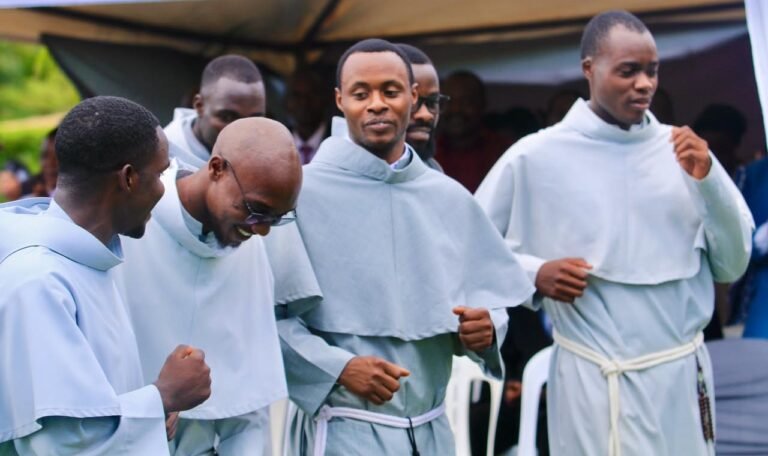
The faithful of Munyonyo Martyrs Shrine joined the rest of the Franciscan family in commemorating the 800th anniversary of the death of St Francis of Assisi during a special celebration held at the Shrine.
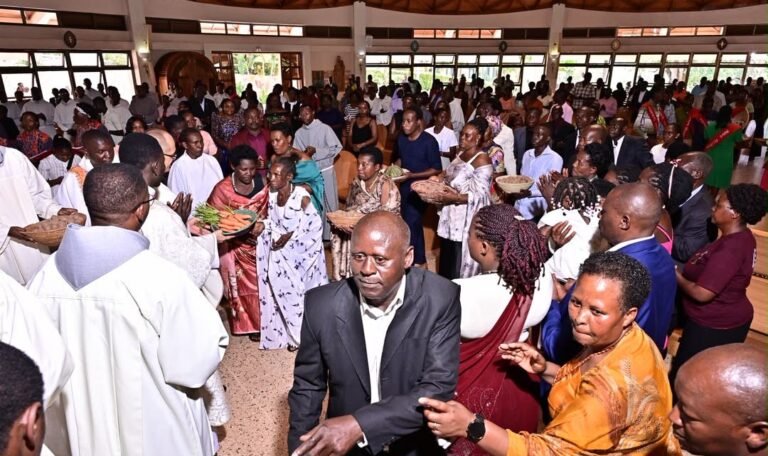
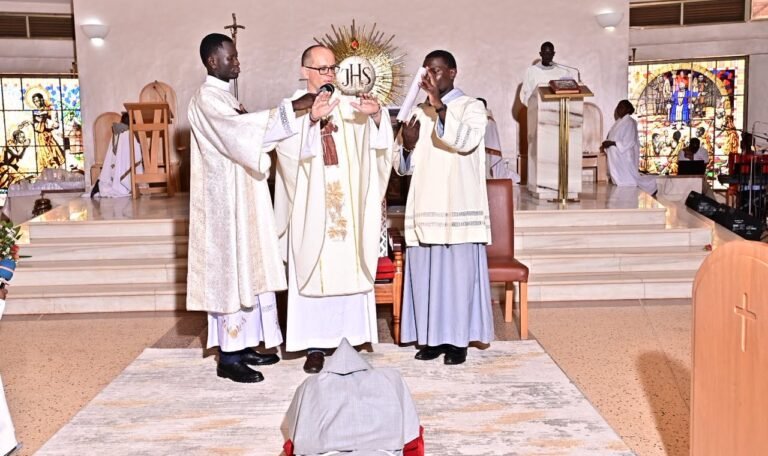
The celebration was also marked by the solemn profession of Br Augustine Ziribumwe, who dedicated his life to God through the perpetual vows of poverty, chastity and obedience.
The celebration, held on Sunday, October 4, 2026, at the Uganda Martyrs Basilica, Munyonyo, brought together Franciscan friars, religious sisters, parishioners, family members and friends of Br Ziribumwe to witness an important milestone in his religious journey.
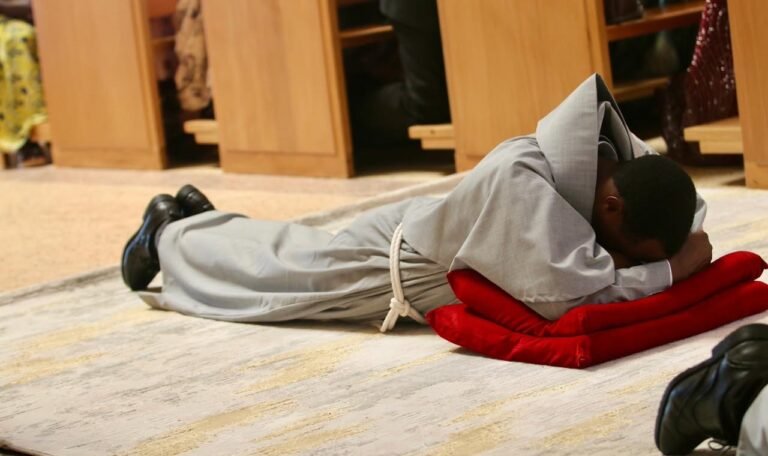
In his homily, the Parish Priest of Munyonyo Martyrs Shrine, Fr Male, explained the deeper meaning of the three evangelical counsels of poverty, chastity and obedience, noting that religious profession is not simply a ceremony or a public declaration, but a complete surrender of one’s life to Jesus Christ.
He said Br Ziribumwe’s solemn profession was important because it coincided with the commemoration of eight centuries since the death of St Francis of Assisi, whose life continues to inspire millions of Christians across the world.
Fr Male described the profession as one of the visible fruits of the Franciscan spirituality planted by St Francis 800 years ago.
He explained that solemn profession should not be confused with priestly ordination or merely viewed as the completion of religious formation.
“It is about saying, God, my life belongs to you,” he told the congregation.
The Parish Priest drew the congregation’s attention to the Franciscan symbol embedded in the floor of Munyonyo Basilica, depicting the hands of Jesus Christ and St Francis of Assisi, accompanied by the Latin words Deus Meus et Omnia, meaning “My God and My All.”
He explained that these words capture the foundation of Franciscan religious life: recognising that possessing Christ is greater than possessing anything else.
The Vow of Poverty: Finding Freedom in Detachment
Explaining the vow of poverty, Fr Male said the Franciscan understanding of poverty goes beyond lacking material possessions. Rather, it is a deliberate decision to live simply, detach oneself from worldly possessions and depend entirely on God.
He observed that modern society often measures a person’s worth by what they own, creating the impression that material wealth determines one’s importance.
However, St Francis embraced a different understanding of life, choosing to abandon material attachments to follow Christ more freely.
“If I have Christ, it is enough,” Fr Male said, noting that the vow of poverty invites religious men and women to place their trust in God rather than material possessions.
He explained that Franciscan poverty involves giving up personal ownership, avoiding extravagance and cultivating generosity.
The Vow of Chastity: Loving Christ with an Undivided Heart
Fr Male explained that the vow is often misunderstood as simply choosing not to marry.
He added that consecrated chastity carries a much deeper spiritual meaning because it involves dedicating one’s entire heart to loving Christ and serving others.
“Chastity is something deeper and something more than just celibacy,” he said.
According to Fr Male, the vow enables a Franciscan friar to embrace a wider spiritual family, becoming a brother to people from different backgrounds, particularly those experiencing poverty, loneliness, rejection and other difficulties.
He explained that Br Ziribumwe’s commitment to chastity was therefore not merely a decision to remain unmarried, but a promise to make himself available to others through a life of selfless love.
“The vocation is just not to have a wife. It’s not about that. It’s about being a brother, a friar,” he said.
The Vow of Obedience: Surrendering Personal Will to God
On obedience, Fr. Male acknowledged that it is often considered the most challenging of the three religious vows because it requires individuals to surrender their personal preferences, ambitions and desires.
He explained that human beings naturally want to make their own decisions and follow their own plans, yet religious obedience calls for humility and trust in God’s direction.
Through this vow, a Franciscan commits to seeking God’s will and accepting legitimate guidance within the religious community.
Fr. Male referred to the example of St. Francis, who demonstrated humility by accepting correction and guidance from Church authorities.
He said that obedience should never be mistaken for weakness, but should instead be understood as an expression of faith and trust.
“Obedience is not a sign of weakness. But it is a sign of trust,” he said.
He also explained the meaning of the three knots on the cord worn around the waist of the Franciscan habit, which represent the vows of poverty, chastity and obedience.
He said the knots serve as a constant reminder of the commitments that define Franciscan religious life.
Reflecting on the Sunday Scripture readings, Fr. Male used the image of a vineyard to explain that God entrusts every person with gifts and opportunities from which He expects good fruits.
He reminded the faithful that God has blessed them with life, faith, family, vocations, the Church and the gifts of the Holy Spirit, and that these blessings should inspire them to serve others.
“Christianity is not only about receiving blessings. We want blessing, but Christianity is about being a blessing,” he said.
Fr Male challenged Christians to move beyond celebrating religious anniversaries and instead allow the Gospel to transform their daily lives.
He warned that it is possible to celebrate St Francis’ poverty without becoming less attached to possessions, admire his humility without becoming humble, or speak about brotherhood while harbouring unforgiveness.
He urged the faithful to make the Franciscan Jubilee meaningful through practical acts of love, simplicity, forgiveness and service.
Br Augustine Ziribumwe expressed gratitude to God, his family, Franciscan superiors, formators, parishioners and everyone who had supported him throughout his religious journey.
He described the occasion as a special and memorable moment in his life, particularly because it coincided with the commemoration of the 800th anniversary of the passing of St Francis of Assisi.
He also thanked his parents, grandfather, siblings, relatives, neighbours and friends for their prayers, encouragement, counsel and material support.
“Thank you for your prayers. Thank you for your counsel, kind wishes, love and charity,” he said.
Following the Holy Mass, celebrations continued at Mother Kevin Gardens, where family members, friends and members of the wider Christian community