Carlo Acutis (anglicized as Charles Acutis), canonized by Pope Leo XIV on September 7, 2025, as the Catholic Church’s first millennial saint, lived a remarkably ordinary yet purposeful life as a student, self-taught programmer, and humanitarian in Milan before his death at age fifteen.
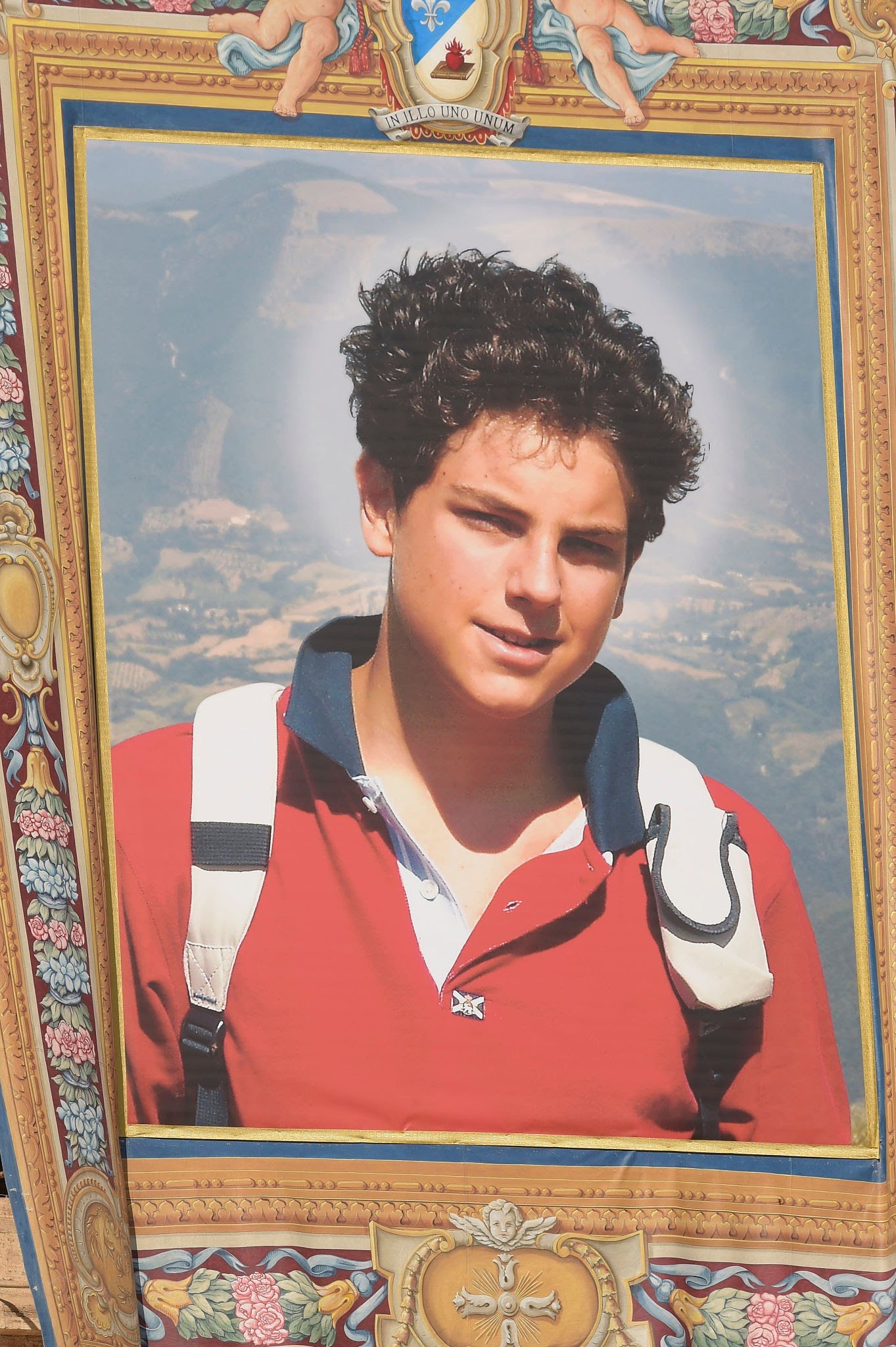
Carlo Acutis was born on May 3, 1991, in London, England, to Andrea Acutis and Antonia Salzano. His parents were working in London at the time, though they hailed from prominent Italian business families—his father in insurance and his mother in publishing. Baptized on May 18 at the Church of Our Lady of Dolours in Chelsea, Carlo relocated with his family to Milan, Italy, in September 1991, where he spent the remainder of his childhood.
Despite growing up in a secular household where religious practice was minimal, Carlo exhibited an early, independent curiosity about spirituality. His Polish nanny, Beata Sperczynska, introduced him to basic prayers and sacred stories, sparking an interest that soon reshaped the habits of his entire household. At age seven, after requesting and receiving permission to make his First Communion early—on June 16, 1998, at the convent of the Romite Nuns of Sant'Ambrogio in Perego—he began attending daily Mass and practicing regular Eucharistic adoration. His mother later credited Carlo’s quiet consistency with bringing her and his father back to active faith.
In Milan, Carlo attended the Marcelline Tommaseo Institute for primary and middle school before enrolling in the Jesuit-run Istituto Leone XIII for high school in 2005. To his classmates and neighbors, he was indistinguishable from any other Italian teenager of the early 2000s:
Carlo possessed a natural aptitude for computer science that far exceeded standard high school curricula. Using university-level programming textbooks he purchased himself, he mastered HTML, C++, Java, and graphic design tools during his middle and high school years. Rather than using these skills purely for entertainment, he managed websites for his local parish, Santa Maria Segreta, and volunteered to build digital platforms for his school and Vatican-affiliated initiatives.
At age eleven, Carlo embarked on his most ambitious undertaking: creating a comprehensive, multilingual online catalog of Church-recognized Eucharistic miracles worldwide. Over two and a half years, he researched historical archives, organized photographic documentation, and coded an interactive website detailing more than 150 miracles across nearly 20 languages. He completed and launched the exhibition just days before his final illness in October 2006; the resource was subsequently adapted into a traveling physical exhibition hosted by thousands of parishes across five continents.
Away from his computer screen, Carlo translated his beliefs into direct action on the streets of Milan. He used his weekly allowance to buy sleeping bags, thermoses, and hot meals for unhoused residents in his neighborhood, often delivering them personally in the evenings. He also volunteered at a soup kitchen operated by the Capuchin friars and taught catechism to younger children at his parish, ensuring that his commitment to service remained practical, local, and personal.
In early October 2006, shortly after launching his Eucharistic miracles exhibition, the fifteen-year-old developed what initially appeared to be a routine flu and throat inflammation. Within days, his condition deteriorated rapidly, and doctors at the San Gerardo Hospital in Monza diagnosed him with acute promyelocytic leukemia (M3), an aggressive form of blood cancer.
Facing acute pain and a sudden prognosis, Carlo remained composed, offering his suffering for Pope Benedict XVI and the Church. He died on October 12, 2006. At his funeral at Santa Maria Segreta two days later, the church was filled beyond capacity—not only with family and schoolmates, but with dozens of unhoused individuals, immigrants, and neighborhood workers whom Carlo had quietly befriended. Following his stated wish to rest near St. Francis, his remains were transferred to Assisi in 2007, setting the stage for his beatification in 2020 and his canonization in September 2025.