 Relic of St Josephine Bakhita Installed at Munyonyo
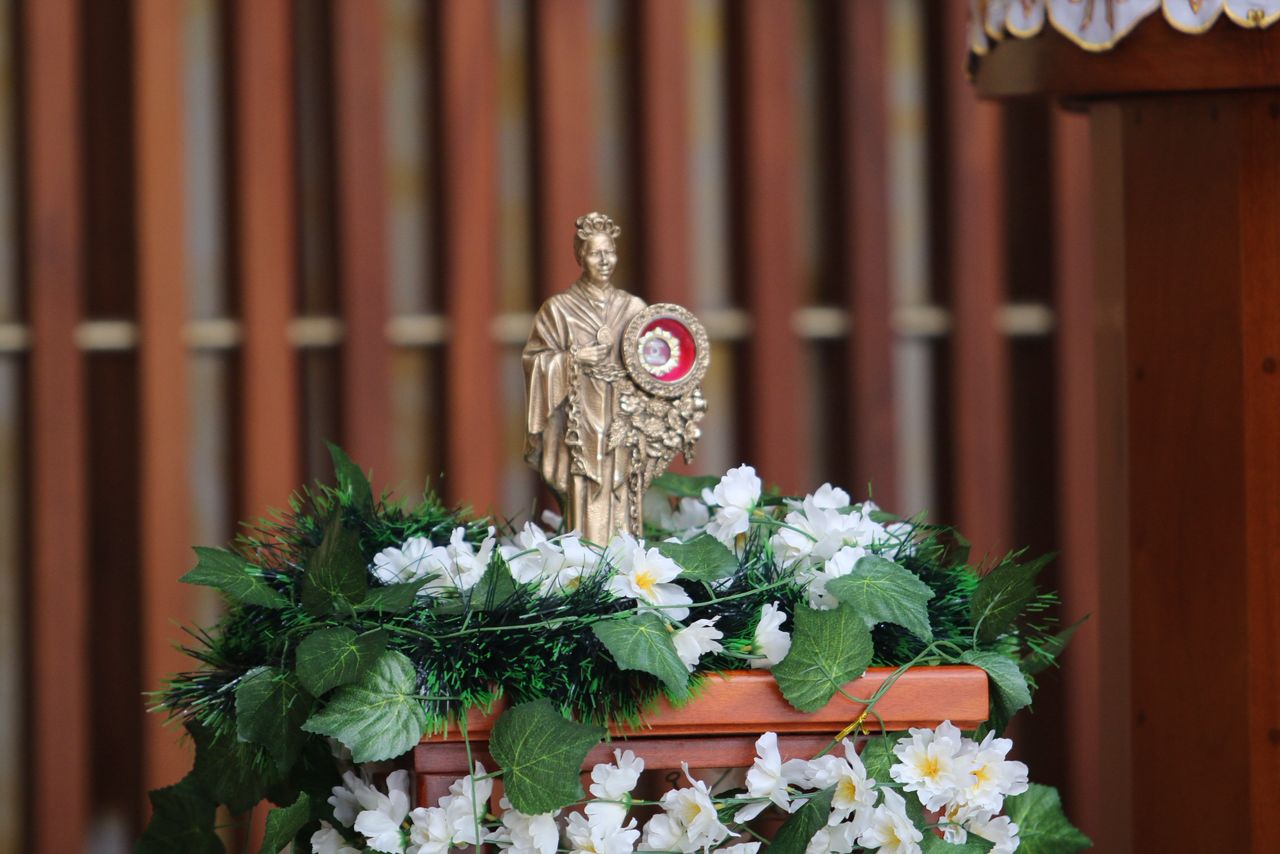
Munyonyo Martyrs Shrine has received the first-class relic of St Josephine Bakhita, the patron saint of victims of human trafficking and modern slavery.
The relics were officially installed in the Divine Mercy Adoration Chapel during Holy Mass celebrated on Sunday, 8th February 2026 at 10:00 a.m., marking the feast day of St Josephine Bakhita.
Presiding over the Mass, the main celebrant, Fr Paul Nsubuga, called upon the faithful to live out their faith through concrete actions rather than keeping it private. Reflecting on the first reading from the prophet Isaiah, Fr Nsubuga reminded Christians that faith must be visible in daily life.
“Isaiah was telling the Israelites that faith must be expressed through action, clothing the naked, feeding the hungry, and caring for others. The same message applies to us today. It is not enough to attend communal Rosary, Eucharistic Adoration, or Divine Mercy retreats if we cannot even greet our colleagues or show kindness to those around us,” Fr Nsubuga said.
He added that the Gospel reading echoed this teaching, with Christ describing believers as salt and light. In biblical times, salt was essential for preservation and flavour, while light guided people so they would not stumble in darkness.
“We are called to be the light that helps others find the right path, through our words, our actions, and how we treat one another. Our lives should draw others closer to God,” he emphasised.
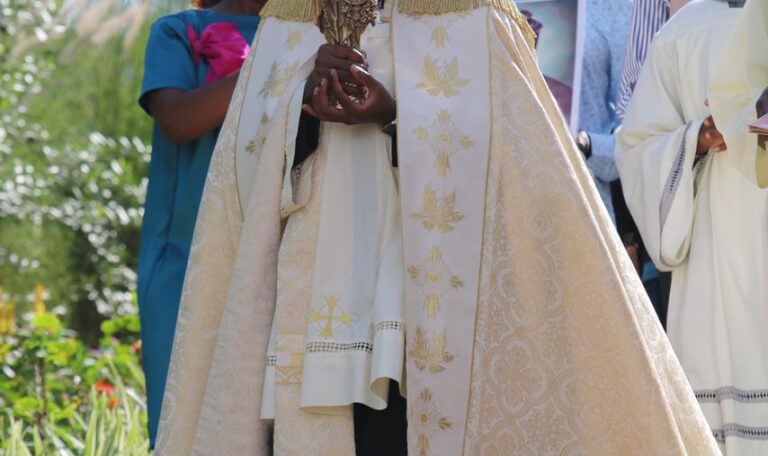
The first-class relic of St Josephine Bakhita was handed over in December by Sr Theophista of the Canossian Daughters of Charity to Fr Male for its installation at Munyonyo.
Before the Mass on Sunday, the Canossian Daughters of Charity gave a moving talk on the life of St Josephine Bakhita, recounting the severe suffering she endured while enslaved. They described how, under her Turkish masters, Bakhita was subjected to a brutal ritual in which her body was cut repeatedly, and salt rubbed into the wounds. She was forbidden to cry and left to bleed without care or compassion. It is said that she bore more than 100 such cuts on her body, an enduring witness to the cruelty she survived and the strength of her spirit.
St Josephine Bakhita was born in Olgossa, in the Darfur region of southern Sudan. At the age of seven, she was kidnapped and sold into slavery, receiving the name Bakhita, meaning “fortunate.” She was sold several times before eventually being purchased in 1883 by Callisto Legnani, the Italian consul in Khartoum.
Two years later, she was taken to Italy and entrusted to Augusto Michieli. While serving as a babysitter to Mimmina Michieli, Bakhita accompanied her to the Institute of the Catechumens in Venice, run by the Canossian Sisters. There, she encountered the Catholic faith and felt drawn to Christ. She was baptised and confirmed in 1890, taking the name Josephine.
When the Michieli family later sought to return to Africa with her, Josephine refused. A court case followed, during which the Canossian Sisters and the Patriarch of Venice intervened on her behalf. The judge ruled that slavery was illegal in Italy and that Josephine had in fact been free since 1885.
She entered the Institute of St Magdalene of Canossa in 1893 and made her religious profession three years later. The cause for her beatification began in 1959. She was beatified in 1992 and canonised in 2000. Though her body bore the scars of slavery, her spirit remained free. Through Baptism, she found both spiritual freedom and a life of service as a Canossian Sister.
Her relic, now enshrined in the Divine Mercy Chapel at Munyonyo joins those of St Faustina Kowalska, St John Paul II, St Maximilian Kolbe, and Blessed Michael Sopocko. The Church celebrates the feast of St Josephine Bakhita on 8th February.